
- A director search is essential before entering a business reflationship, as it helps you assess the director’s track record, success, and character before transacting.
- The Companies House search tool lets you check if a director is disqualified or linked to failed businesses, providing key insights for informed decision-making.
What is the Companies House director search?
A Companies House director search allows you to research an individual’s history as a director of UK companies, both active and dissolved. This search details past and present directorships, helping you assess a director’s business track record.
Companies House register also includes a list of disqualified directors, enabling you to check if an individual has been banned from holding directorships in the UK. You can verify their status by searching for a specific name and ensuring they are not listed as disqualified.
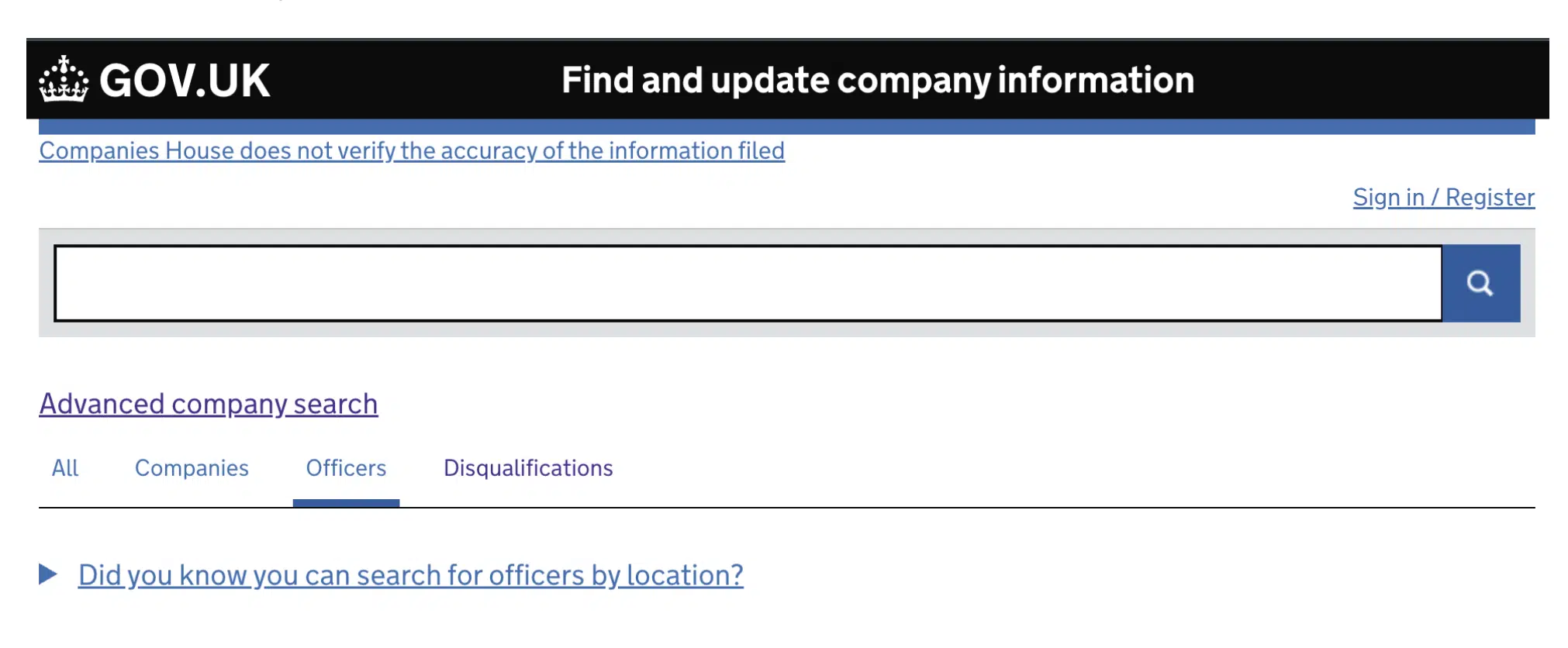
What information can you find on a company director on the Companies House search?
You can find a complete director profile in the search register, with the following information.
- Full names
- Any other previous names held by the director (incl. Maiden or married names) used for businesses in the last 20 years.
- Correspondence address, which may be the director’s home address or the company’s registered office
- Any previously held correspondence addresses associated with the individual.
- All other current and past appointments, including shareholder, director, secretary, or person with significant control.
- The nature of control over companies where the individual holds an active directorship, including details such as percentage of share ownership, voting rights, and other significant control interests.
- Current status in a company (active or resigned)
- Date of appointment and resignation to or from a company.
- Whether the individual is disqualified from directorship, including the reason for disqualification and the company they were associated with at the time of disqualification.
- Country or state of usual residence
- Month and year of birth
- Occupation
- Nationality
Do I need a company name to conduct director research?
No, a company name is not required to conduct a director search. You can look up a directory using just their name, but having additional details, such as their correspondence address, can help refine the search and ensure accuracy. If you have a company name, it can further narrow down the results by linking the director to a specific business.
How do I check if a new director is disqualified?
To check if a new director is disqualified, you can use two methods:
- Company Name Search – Search the director’s name using the Companies House search tool. This will display their directorship history, including any disqualifications linked to their records.
- Register of Disqualifications – Look up their name in the disqualified directors register, which includes:
- Full name and date of birth
- Nationality
- Case reference number
- Company they were acting for at the time of disqualification
- Reason for disqualification
When looking up a director’s name, having details like their address and company name helps you identify the right person. You can also refine your search by adding location details, such as: John Doe location: ‘High Street, London’ or John Doe location: ‘CF14’
How do I research about a company director before doing business on the Companies House Register?
You can perform a Companies House director search to surface key information about a potential director. You will need their full names, to narrow your search, it will be useful to have their correspondence address or the companies they have served as director.
How can you use the advanced search function to research company officials, including shareholders and Persons with Significant Control?
The advanced search function on Companies House allows you to research company officials, including directors, shareholders, and Persons with Significant Control (PSC). There are two main approaches you can use:
a. Searching by Company Name (Focused but Limited)
If you know the company name associated with the person of interest:
- Enter the company name in the advanced search tool.
- Use the “names that contain” field to refine results.
- A list of companies matching your search will populate.
- Click on the company and navigate to the “People” tab to view:
- Company officers (directors and secretaries)
- Persons with Significant Control (PSC)
This method helps you investigate an individual’s role within a specific company, but it won’t show their involvement in other businesses.
b. Searching by Individual Name (More Comprehensive Approach)
Enter the individual’s name directly into the Companies House register for a broader search. This will provide:
- All companies the person is associated with, past and present.
- A complete list of directorships and PSC roles across multiple businesses.
- Any other offices held, including shareholder positions.
What is the difference between a director’s service and a company’s registered office address?
A director’s service address is used for receiving official correspondence related to their role, such as statutory mail from Companies House, HMRC, and other government agencies. It ensures that the director can be contacted for company-related legal matters.
A company’s registered office address, on the other hand, is the official address of the company. It is the primary location for receiving legal and statutory documents and establishes the company’s legal presence within the UK, ensuring compliance with UK laws and regulations.
How do you protect your personal information on the Companies House service?
As a director, complete anonymity is not possible. Companies House must legally display specific details, including your name, date of birth, and role within the company to ensure corporate transparency. However, there are steps you can take to protect your personal address from public view:
- Use a separate service address – Instead of your home address, you can provide a service address for correspondence.
- Request removal of your residential address – If your home address was previously listed, you can apply to have it removed from public records.
- Work with a service address provider – Consider using a registered office and mail-handling provider to ensure privacy while meeting legal requirements.
What director information can I find on annual accounts, confirmation statements, and other company records filed with the register of companies?
Company records filed with the Companies House register provide insights into business performance, a director’s responsibility, and compliance history. These records can help assess a director’s competence, reliability, and adherence to regulatory requirements.
- Confirmation Statement – This document verifies the accuracy of company details. When reviewing it, you can check whether the director files the statement on time, which reflects their ability to comply with legal obligations and statutory timelines. A history of late filings or inconsistencies may suggest poor management practices or a lack of attention to regulatory requirements.
- Annual Accounts – These provide an overview of a company’s financial performance, indicating a director’s business acumen and management skills. Strong financial records may reflect effective leadership, while poor or irregular accounts could signal financial mismanagement.
Other company records, such as the filing history, mortgage records, and significant control filings, may further reveal a director’s business decisions and overall governance style. A pattern of late submissions, penalties, or changes in company structure can provide additional insights into how a director runs their business.

Your email address will not be published. Required fields are marked *