

- Use the free Companies House search service to review the legitimacy of any company, company number to check registration, directors, and filing history.
- Verify VAT numbers instantly through HMRC to confirm tax registration and spot fraudulent claims.
- Check Financial Conduct Authority (FCA) authorisation for any company offering financial services or investments.
- Run credit checks to assess financial health and payment patterns before major contracts.
- Look for red flags, including dormant status during trading, missing filings, and frequent director changes.
- Trust your instincts when companies pressure you for payment, refuse to provide registration details, or avoid meeting at their premises.
Run the Company Number on the Companies House Database to Confirm if the Business Is Legit In the UK
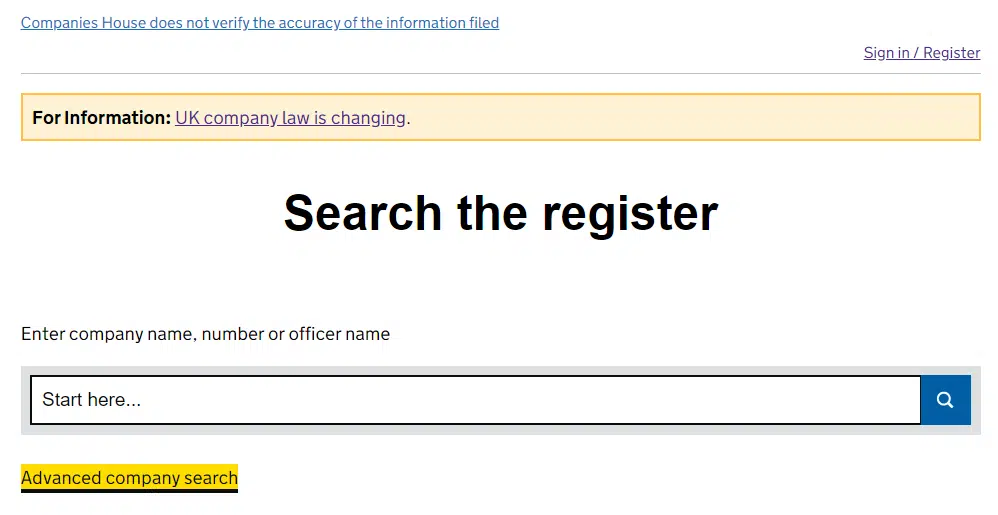
The fastest way to check if a company is real in the UK is to use the Companies House search. This free government database lists every legally operating company in the UK. If they aren’t on here, or their details don’t match, you should be cautious.
You can also run a free company check here – it reads the same live register and shows status, officers and filing history on one screen.
You can search by company name or their 8-digit Company Registration Number.
How to Check the Register:
- Go to the Database: Open the Companies House Service.
- Enter the Details: Type in the company name or CRN.
- Check the Status: Look for the word “Active” next to the company status. Avoid companies marked as “Dissolved.”
- Compare Address: Ensure the address listed here matches the one on their website or invoice.
3 Quick Checks to Spot Fake Details
Once you have the company record open, do these three quick comparisons:
- The ID Check: Does the registration number (CRN) on the screen match the one on their paperwork?
- The Location Check: Is the Registered Office a real address? (Google Maps is useful here).
- The History Check: Look at the “Filing history” tab. A real business will have a history of filing accounts on time.
Verify Company Directors and People with Significant Control to Confirm Legitimate Ownership
Legitimacy of a company goes beyond the registration record; you must validate the humans running it. By reviewing the Directors and People with Significant Control (PSCs), you can expose hidden risks, past failures, or fraudulent appointments.
1. Audit the Directors and Management History
Use the Companies House Director Search service to scrutinise the people currently in charge. Pay attention to these specific red flags:
- Short Tenures: Be suspicious of directors who resign shortly after being appointed.
- “Serial” Directors: Watch for individuals with hundreds of unrelated active appointments.
- Disqualifications: Cross-reference names against the Register of Disqualifications to ensure they aren’t banned from running a company.
2. Identify the True Owners (PSCs)
The “People with Significant Control” register reveals who actually owns the business (anyone with >25% shares or voting rights). This is often where you find the real decision-makers.
From November 2025, all directors and PSCs must complete mandatory identity verification via GOV.UK One Login or through an approved ACSP. If a company’s officers are “Unverified,” treat this as a major warning sign.
See also: Guide: The PSC Register Explained.
3. Screen for Personal Insolvency
A clean Companies House record doesn’t mean the director is financially sound. Check the Individual Insolvency Register for risks that company filings miss:
- Bankruptcies: Active bankruptcy restrictions often legally prevent someone from being a director.
- Phoenixism: Look for directors who have a history of “crash and burn” businesses that run up debt, dissolve, and restart under a new name.
- Instability: Watch for excessive simultaneous appointments or overseas addresses tied to UK-based operations.
By combining director checks on Companies House with insolvency records, you gain a more comprehensive understanding of whether the leadership behind the company is trustworthy.
Analyse Company Filing History and Compliance Patterns to Validate Operational Stability
A company’s filing patterns are one of the most reliable indicators of its legitimacy. By reviewing the “Filing history” tab on Companies House, you can distinguish between an organised, transparent business and one with hidden management issues.
Critical Documents to Scrutinise
Don’t just look for the existence of documents; look for the timing and consistency of these specific filings:
- Confirmation Statements & Accounts: Check that these are filed on time. Late filings often indicate cash flow problems or administrative chaos.
- First Gazette Notices: If you see a “Gazette” notice for compulsory strike-off, it is a major red flag. It usually means the government is trying to shut the company down for non-compliance.
- Amendments and Corrections: Watch for frequent “Amended” accounts. A pattern of constant corrections suggests poor record-keeping or possible financial manipulation.
- Company Status: Ensure the business is “Active.” Be cautious of companies with a history of dipping in and out of “Dormant” status while trading.
Missing statutory filings are dangerous warning signs that can lead to penalties or dissolution. In contrast, legitimate businesses typically demonstrate a boring, predictable track record of compliance.
Validate Business Tax Status and Detect Fraud Using the Official HMRC VAT Number Checker
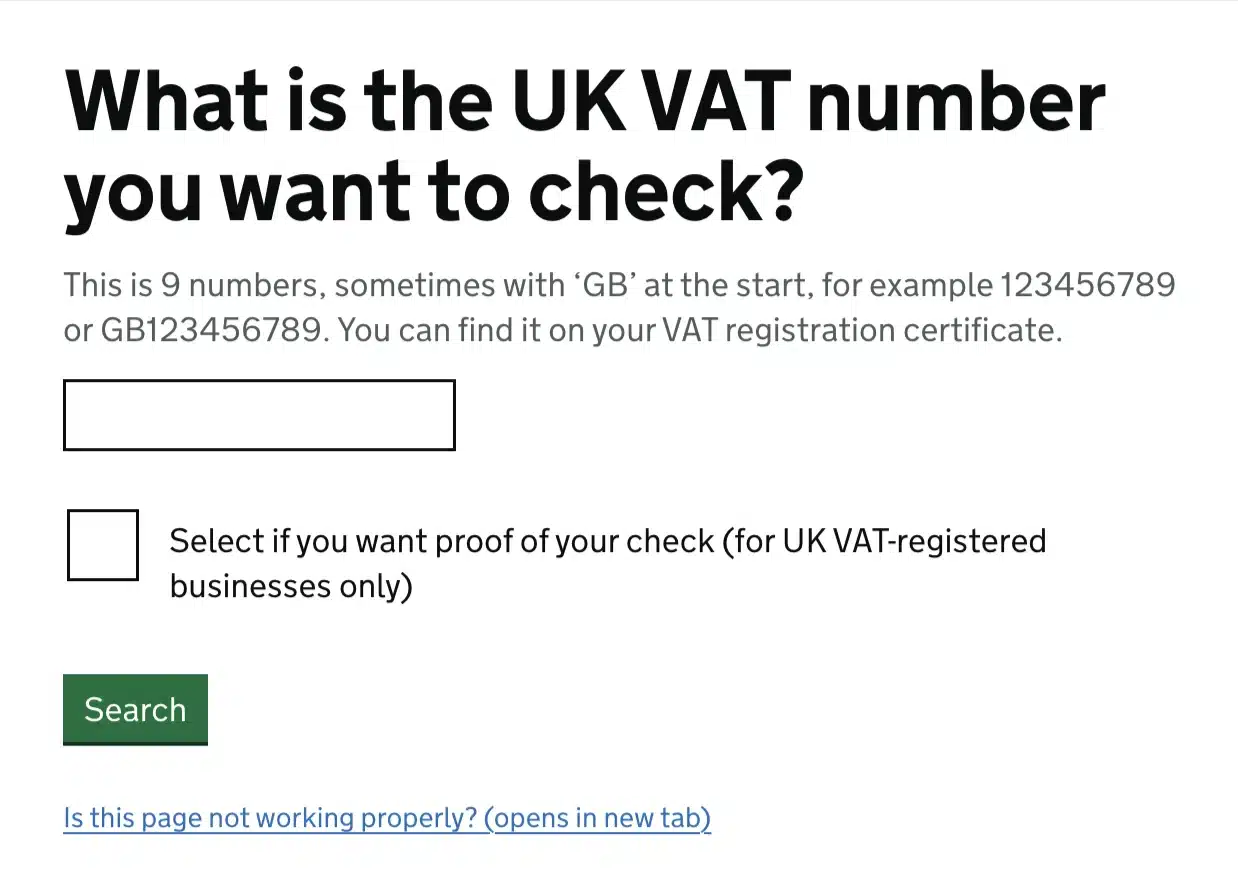
Confirming a company’s VAT status is a critical defense against invoice fraud. Use the free HMRC VAT Checker to instantly verify whether a company is legally authorised to charge tax. If they are charging you VAT but aren’t on this register, they are likely committing a crime.
How to Verify a VAT Number:
- Enter the ID: Input the VAT number (usually 9 digits, e.g., GB123456789).
- Check the Match: The system will return the registered business name and address linked to that number.
- Cross-Reference: Ensure these details match the invoice and the data on Companies House.
What the Results Reveal
Use the search results to spot these common inconsistencies:
- Identity Theft: Does the VAT number belong to a completely different company? This is a common tactic used by fraudulent companies.
- Fake Invoices: Is a small sole trader charging you VAT? If they are below the threshold and not registered, they cannot legally add VAT to your bill.
- Address Mismatches: If the VAT address differs from their Companies House address, ask for an explanation.
If a supplier refuses to provide their VAT number, treat this as a major red flag. Legitimate UK businesses have no reason to hide this public tax information.
Note: For companies trading across borders in the EU, you should also validate their EORI number to ensure they are registered for customs.
Run Comprehensive Credit Checks to Assess Financial Solvency and Payment Reliability
Government databases tell you if a company exists; credit reports tell you if they can pay. To avoid bad debt, you should access independent financial data that reveals payment habits and creditworthiness beyond the public filing history.
Using Dun & Bradstreet (D&B)
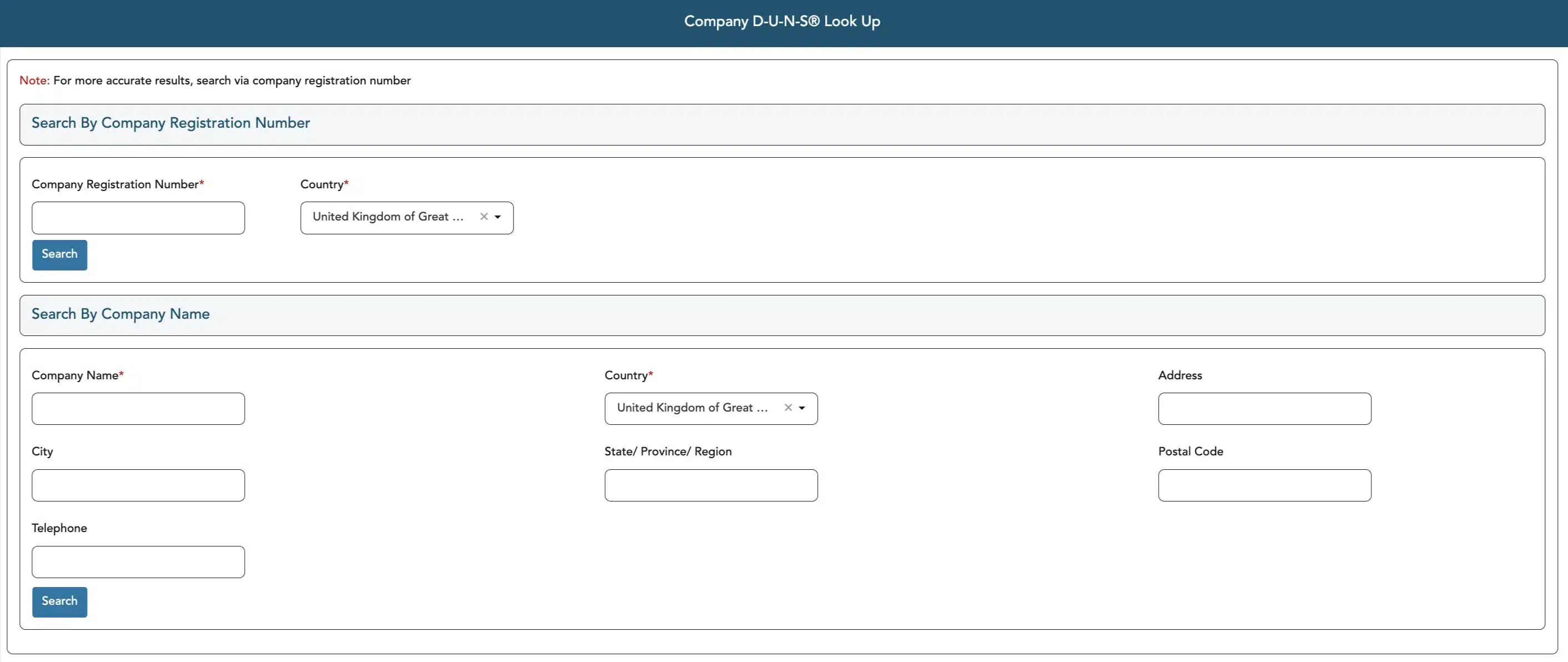
A primary tool for this is the DUNS Number Lookup. Accessing a company’s PAYDEX report gives you a prediction of how likely they are to pay their invoices on time.
What the Scores Reveal
When reviewing a credit report, focus on these specific indicators:
- PAYDEX Score: A score of 80+ indicates prompt payment. Scores below 50 often signal severe cash flow issues or intentional delays.
- Credit Limit Recommendations: These reports suggest a safe maximum credit limit (e.g., £5,000). Exceeding this increases your risk exposure significantly.
- Trade Exchange Data: This shows real-world data from other suppliers. If a company is paying the electricity bill but ignoring suppliers like you, this data will show it.
Analyse Financial Statements to Uncover Hidden Insolvency Risks
When you review company accounts on Companies House, specific data points can reveal if a business is thriving or drowning. Legitimate companies publish transparent, consistent accounts. Red flags appear when that transparency weakens or the numbers stop adding up.
1. Scrutinise the Auditor’s Opinion
The auditor is your first line of defense. Check their report for:
- Qualified or Adverse Opinions: If an auditor issues a “Qualified” opinion, it means they doubt the company’s data or ability to continue trading. This is a massive warning sign regarding financial integrity.
- Auditor Churn: Has the company changed auditors three times in three years? Frequent changes often suggest that the previous auditors resigned because they disagreed with the company’s accounting practices.
2. Evaluate Solvency and Debt
Use the Statement of Financial Position to calculate the company’s actual health:
- Debt-to-Asset Ratio: High debt levels relative to assets signal stress. Look for shrinking cash reserves or rapidly increasing short-term loans.
- Revenue Trends: Compare the Statement of Income over three years. A steady multi-year decline is harder to fix than a one-off bad year. Verify that the growth they claim on their website matches the reality in their filed accounts.
3. Spot “Creative Accounting”
Restated accounts or unexplained adjustments are often smoke and mirrors:
- Unusual Adjustments: Frequent “corrections” to prior years suggest weak internal controls or attempts to manipulate profit figures.
- Missing Disclosures: If the Directors’ Report or Notes to the Accounts are empty or generic, ask why. Transparent firms provide detailed notes on tax, pensions, and liabilities.
4. Look for Patterns
Never rely on a single year’s data. Review at least three years of filings to distinguish between a temporary blip and a structural failure. Volatile results, frequent restatements, and rising debts are the clearest indicators that a business is unsafe.
Verify Regulatory Status for Financial Services Using the Official FCA Register
If a business offers investments, insurance, loans, or crypto assets, they must be regulated by the Financial Conduct Authority (FCA). Dealing with unauthorised firms strips you of legal protection if the company collapses or acts fraudulently.
How to Check the Register:
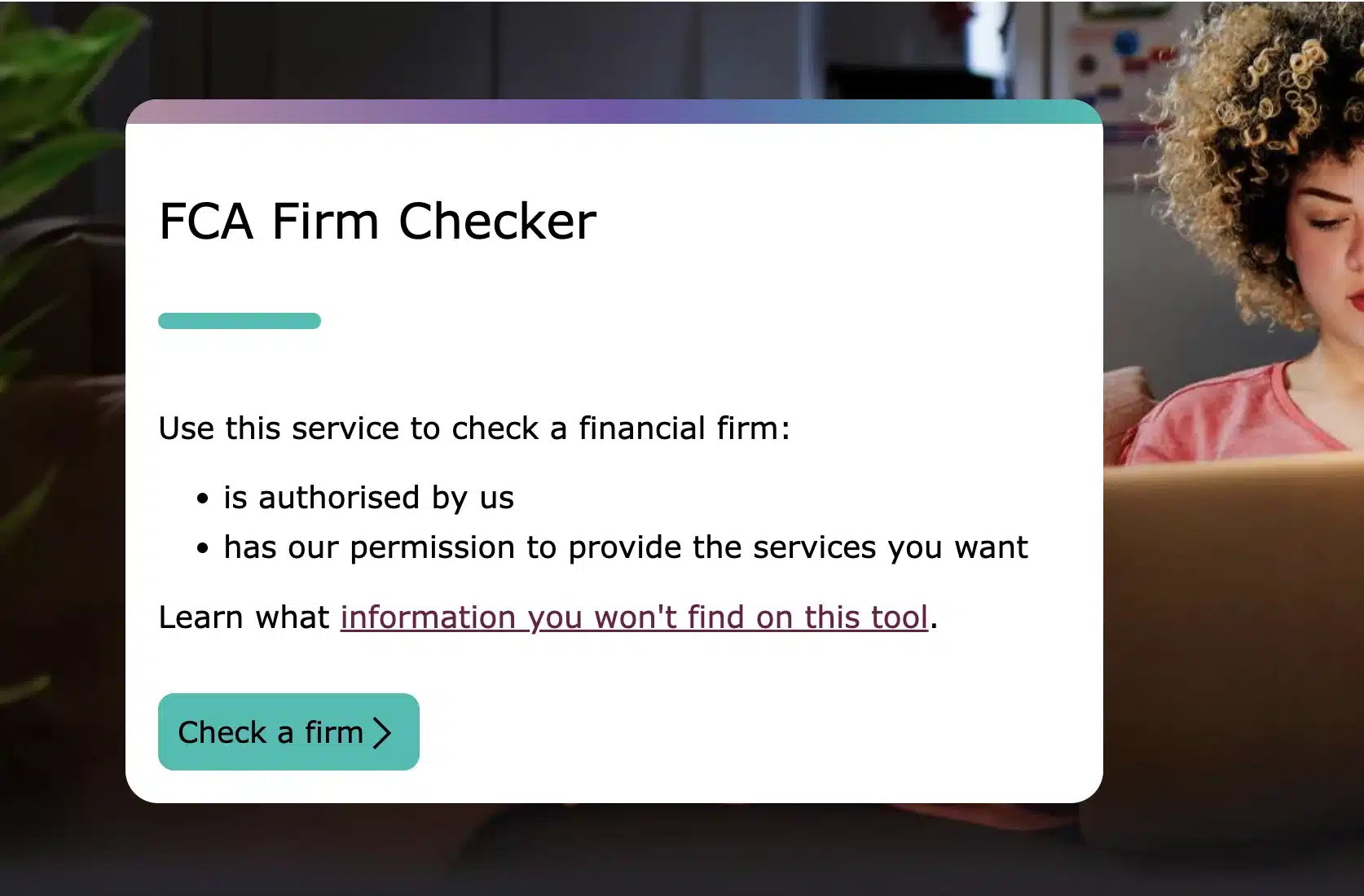
- Search the Database: Go to the FCA Register and enter the company name or postcode.
- Verify Contact Details: Scammers often use “Clone Firms”—using the name of a real company but their own phone number. Always call the number listed on the FCA website, not the one in the email you received.
- Check Permissions: Ensure they are authorised for the specific service you need. A firm regulated for “Insurance” cannot legally offer you “Investment Advice.”
Crucial Checks for Safety
- Permission Mismatch: Some businesses act beyond their scope. If a company claims FCA status but operates outside their granted permissions, consider it a red flag.
- The Warning List: Before transferring money, check the FCA Warning List. This database tracks known scams and unauthorised operators currently targeting UK consumers.
Analyse Domain Age and Website Consistency to Expose Digital Inconsistencies
A glossy website can be built in an hour, but you can’t fake a digital footprint. By analyzing a company’s domain name registration and online presence, you can spot discrepancies that registration documents might miss.
1. The “Time Travel” Check (WHOIS Lookup)
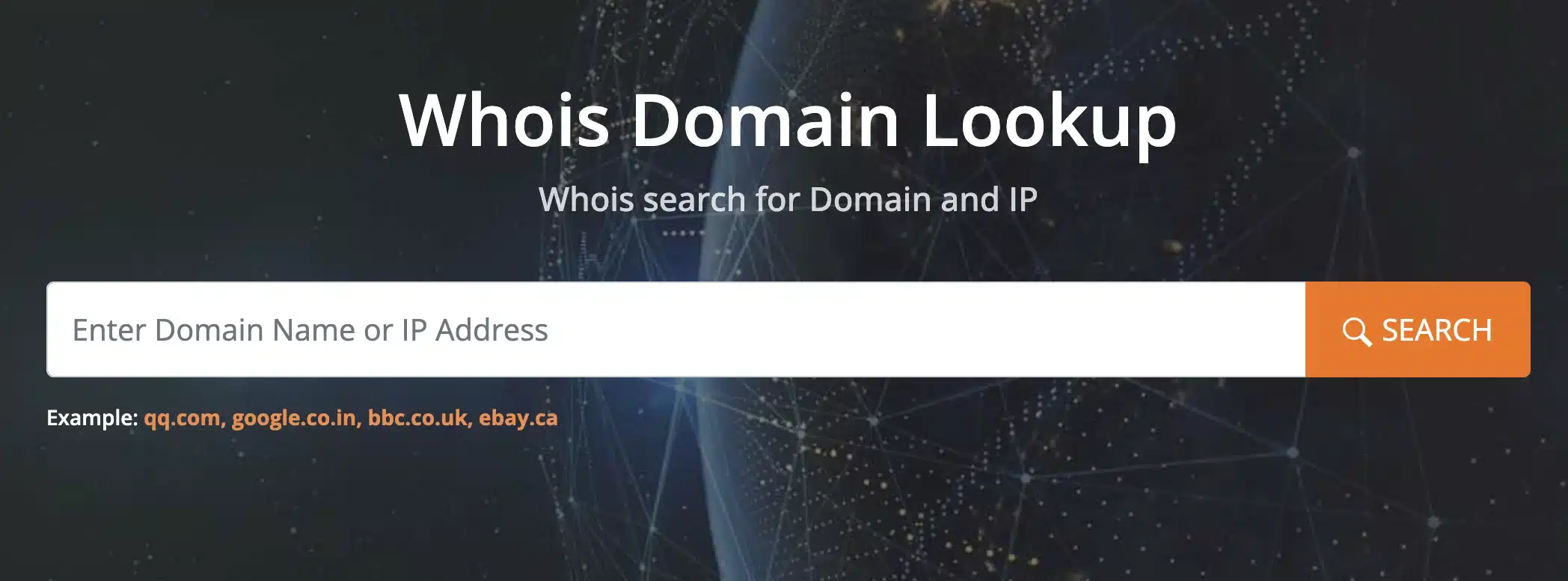
Use a WHOIS lookup tool to see exactly when the website was created. Look for this specific red flag:
- The Age Gap: If a company claims “20 years of experience” but their domain was registered last month, they are lying. Legitimate companies generally have domains that match their claimed lifespan.
2. Technical & Communication Signals
Professionalism is a proxy for legitimacy. Scrutinise how they communicate:
- Email Protocols: Be wary of “Professional” businesses using free providers (e.g., company@gmail.com). Established firms invest in custom email domains.
- SSL Security: Ensure the site uses “https” (the padlock symbol). A missing certificate on a site asking for payment details is an immediate danger sign.
3. Legal & Location Consistency
Scammers often cut corners on the legal fine print. Perform these consistency checks:
- The “Copy-Paste” Test: Check the privacy policy and terms and conditions. Search a specific phrase in Google; if it appears on 50 other unrelated sites, it’s likely a generic template.
- Address Matching: Does the business address on the “Contact Us” page match the official Companies House record? Fraudsters often list prestigious addresses (like London SW1) on their site while their legal address is actually a PO Box elsewhere.
Evaluate Market Reputation and Customer Feedback to Gauge Trustworthiness
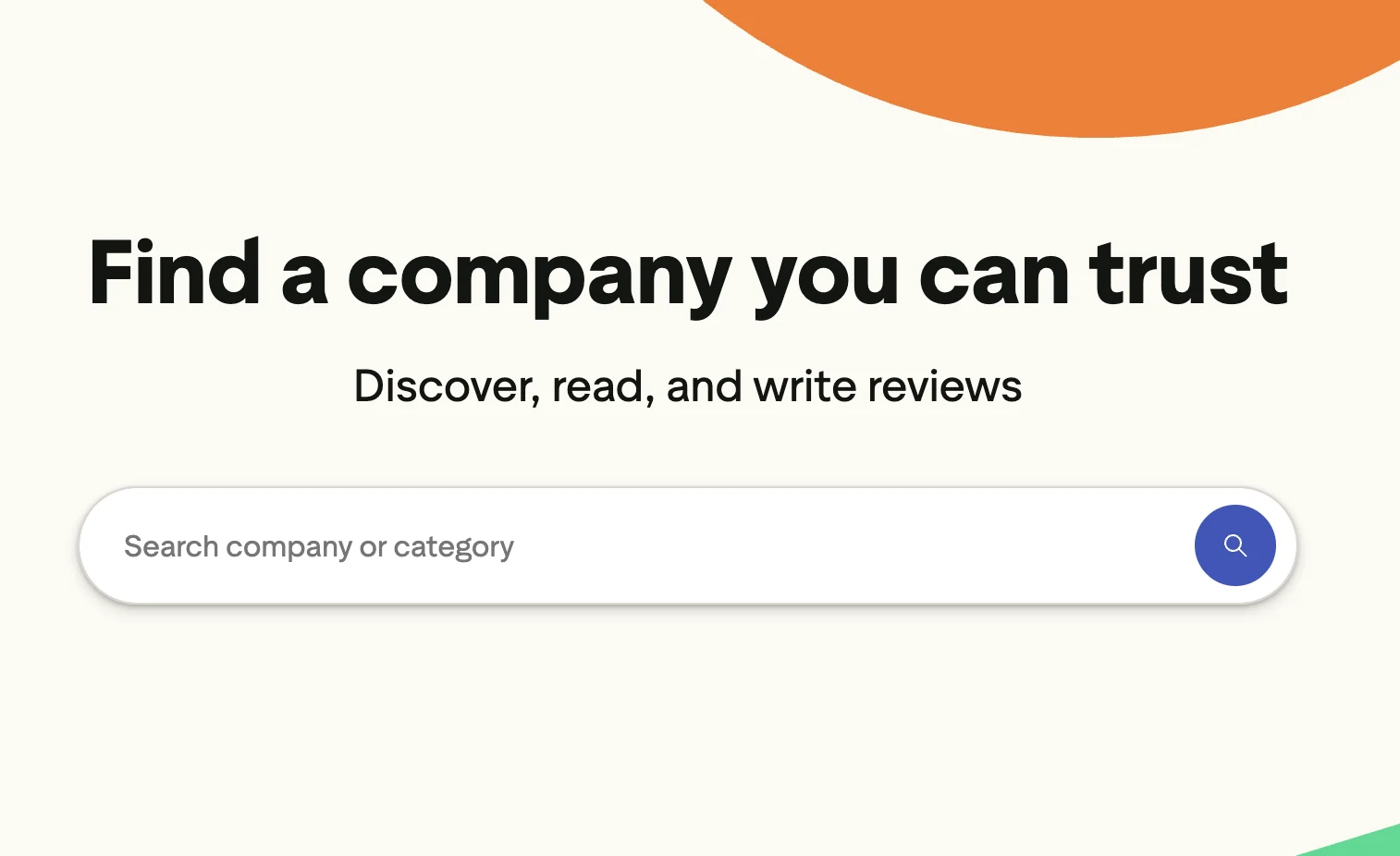
Online reviews are the most direct window into a company’s reliability. However, not all reviews are created equal. To determine whether you can **trust a company**, you need to analyze feedback across multiple independent platforms.
1. Select the Right Platform for the Job
- Google Business Profile: Best for local presence. Check if the reviews are recent and if the profile is active.
- Trustpilot: Essential for e-commerce. Look specifically for the “Verified” badge, which confirms the reviewer actually bought a product.
- Glassdoor: Revealing for internal culture. If employees complain about unpaid wages or management dishonesty, it is highly likely that potential business partners will face similar issues.
2. How to Spot Fake Reviews
Don’t just look at the star rating. Analyze the patterns to detect manipulation:
- The “All 5-Star” Trap: If a company has 500 reviews and every single one is 5 stars with no text, they are likely bought. Legit businesses have a mix of feedback.
- The Timeline Spike: Did they get 100 glowing reviews in one day after months of silence? This suggests a paid campaign to bury negative press.
- Vague Language: Be skeptical of generic praise like “Great service” repeated fifty times. Real customers mention specific staff names or product details.
3. The Response Test
How a company handles criticism is often more telling than the complaint itself. Look for professional, solution-oriented responses to negative feedback. Companies that ignore complaints or attack reviewers demonstrate poor customer service and a lack of accountability.
Validate Professional Credentials and Industry Memberships to Ensure Competence
For service-based businesses, a company number proves they exist, but professional memberships prove they are qualified. Never rely solely on a logo displayed on a website; these are easily copied. You must verify the license directly with the governing body.
1. Medical and Legal Professionals
These fields are strictly regulated. If a practitioner is not on these registers, they are likely practicing illegally.
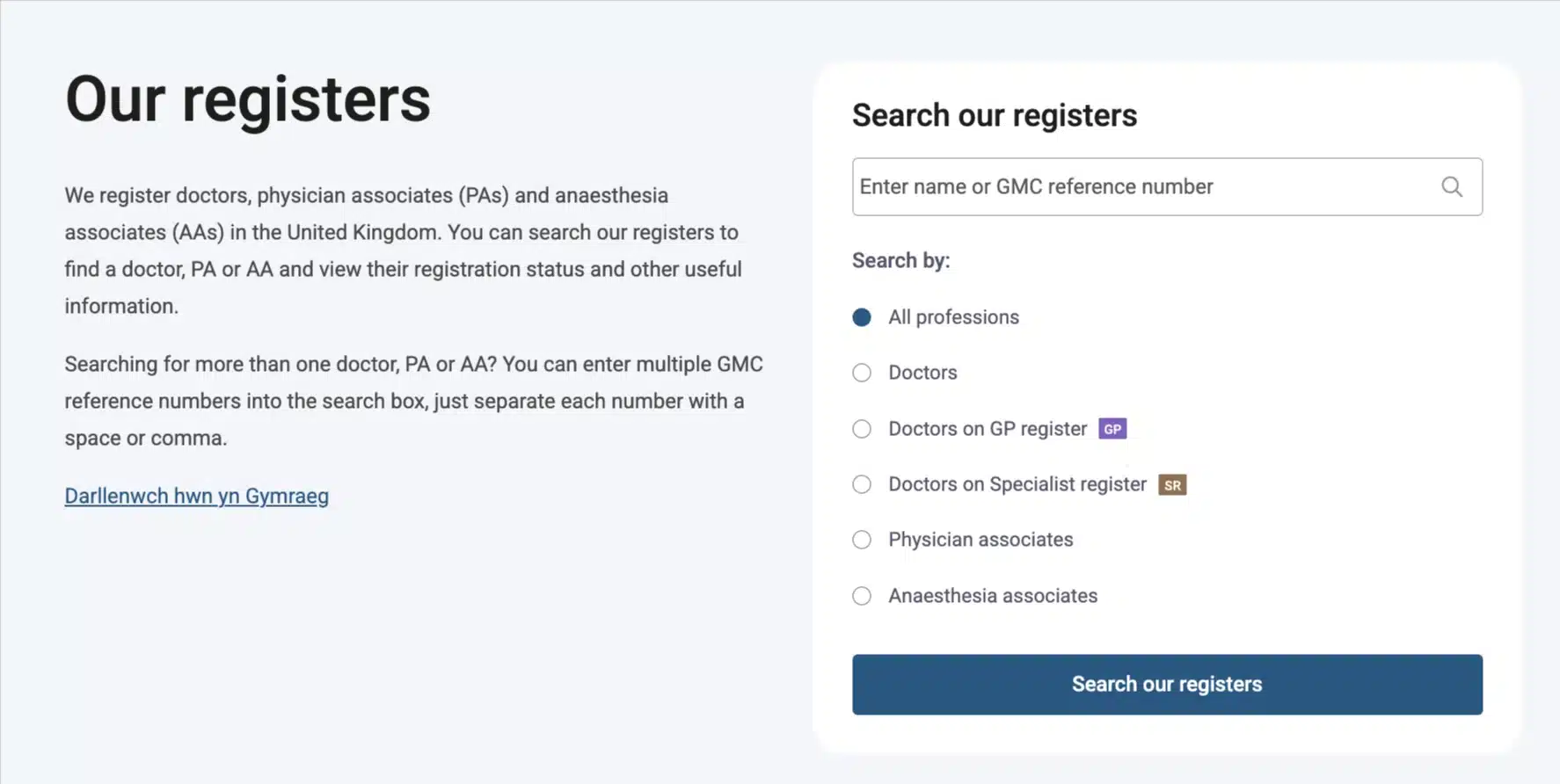
- Doctors: Search the GMC register at gmc-uk.org. Confirm the doctor has a “License to Practice” and check for any warnings.
- Solicitors: Validate credentials via the SRA at sra.org.uk. The register reveals disciplinary history and whether they are authorized to hold client money.
2. Financial Experts
Anyone can call themselves an “accountant,” but “Chartered” status requires verification. Check the member directories for:
- ICAEW: For Chartered Accountants in England and Wales (icaew.com).
- ACCA: For Certified Accountants globally (accaglobal.com).
3. Trade and Technical Services
For construction and property work, verifying membership is often a safety requirement, not just a quality check.
- Gas Engineers: Must be on the Gas Safe Register.
- Electricians: Check the NICEIC register.
Why Verification Matters
A confirmed membership typically ensures the business holds valid insurance and adheres to a strict code of conduct. If a company claims a membership but refuses to provide their registration ID, consider this a significant red flag.
Identify Behavioural Red Flags and Trust Your Instincts to Prevent Fraud
Behavioural cues often reveal a scam long before the paperwork does. Fraudsters rely on psychological pressure and confusion to bypass your critical thinking. If you encounter any of the following behaviours, pause all negotiations immediately.
The 5 Warning Signs of Business Fraud
- Evasiveness: A legitimate UK company has no reason to hide. If they are reluctant to provide their company number or registered address, they are hiding something.
- Financial Pressure: Be extremely wary of demands for upfront payment without documentation. Scammers use “urgent deadlines” to panic you into paying before you have done your due diligence.
- Untraceable Payments: Modern businesses use bank transfers or cards. A request for “Cash only,” cryptocurrency, or wire transfers to personal accounts is a massive red flag for tax evasion or theft.
- Inconsistent Identity: Does the person on the phone know basic details like the director’s name? If they give vague answers about the company structure, they may be an unauthorized impersonator.
- The “Miracle” Deal: If an offer promises unrealistic returns or prices far below market rate, it is almost certainly a trap. Too-good-to-be-true offers are the hallmark of investment scams.
Trust Your Instincts
Your gut feeling is a valid data point. If a company refuses to meet at their premises, deflects simple questions, or makes you feel uncomfortable, walk away. It is always better to lose a deal than to lose your capital to a fraudster.
Leverage the Economic Crime Act and New 2025 Identity Laws to Validate Authenticity
The landscape of business verification is shifting. The Economic Crime and Corporate Transparency Act 2023 has introduced powerful new tools for due diligence, with the most significant reforms entering force on 18 November 2025.
1. Mandatory Identity Verification
From November 2025, anonymity is no longer an option. All company directors and Persons with Significant Control (PSCs) must verify their identity via GOV.UK One Login.
- The Check: When searching Companies House, look for the “Verified” status next to officer names.
- The Red Flag: After the deadline, any new company with “Unverified” officers should be treated with extreme caution.
2. Ban on PO Box Addresses
The Act now strictly prohibits the use of P.O. boxes as registered office addresses unless they are part of a full physical address service.
- The Check: Ensure the company lists a complete, physical location where documents can be delivered. A genuine business must now be traceable to a real location, not just a mailbox number.
By understanding these new rules, you can use the government’s own compliance framework to filter out opaque or fraudulent entities instantly.
Final Summary: Execute a Multi-Layered Verification Strategy to Protect Your Business
Verifying a company’s legitimacy has never been easier. Enhanced government databases, mandatory identity verification, and stronger enforcement powers now make business checks more reliable than ever. By combining free official tools with independent checks, you create multiple layers of assurance.
The Ultimate Due Diligence Checklist
- The Foundation: Start with Companies House to confirm legal status and officer history.
- The Cross-Check: Validate data using the HMRC VAT Checker and FCA Register.
- The Future: Leverage the November 2025 reforms, which force directors to verify their identities, making it significantly harder for fraudulent companies to operate.
Investing a few minutes in due diligence can prevent significant losses. Always confirm that a company meets all key legitimacy markers before committing to any partnership or payment.

Your email address will not be published. Required fields are marked *