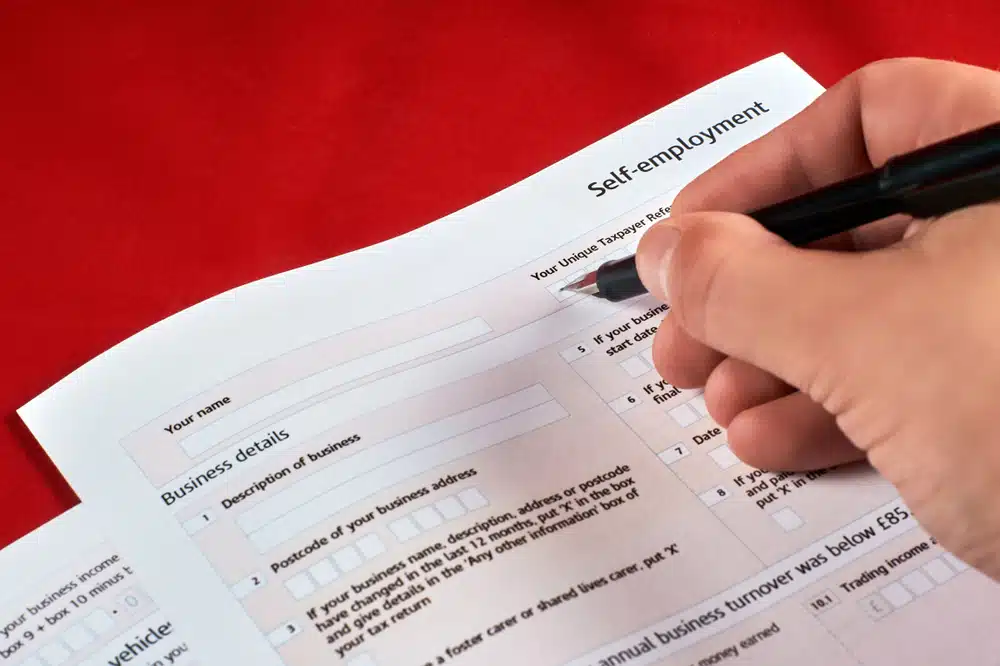

- A Unique Taxpayer Reference (UTR) number is a 10-digit identifier issued by HM Revenue and Customs (HMRC) in the UK to individuals and businesses for tax purposes.
- Individuals can apply for a UTR number by registering for Self Assessment through their Government Gateway account.
- Limited companies receive their UTR number automatically upon incorporation, which is sent to the company’s registered address.
What is a UTR number?
A UTR (Unique Taxpayer Reference) number is a 10-digit tax identification number issued by HMRC to individuals and limited companies in the UK. Individuals must apply for it online or by post, while limited companies receive it automatically upon incorporation.
Also related: Company UTR Number Explained
How do I apply for a utr number online?
To apply online, you must register for self-assessment with HMRC through your Government Gateway account using your Government Gateway user ID and password.
Once logged in, complete the self-assessment registration form, providing personal details such as your name, address, date of birth, and National Insurance number. You may also need to provide information about your business if you’re self-employed.
After you submit your application, HMRC will process your request. You’ll receive your UTR number by post, typically within 10 working days. You can access it online through your personal tax account or the HMRC app.
Can I register for a UTR number by post?
You’ll get a utr number when you register for self assessment online or by post. The process involves filing and submitting the appropriate forms based on your circumstances:
- Form SA1 For individuals who need to register for Self Assessment.
- Form SA400 For partnerships registering for Self Assessment.
- Form SA100 File your annual tax return.
You can request these forms by calling HMRC at 0300 200 3310. Depending on your situation, you might also need to include supplementary pages, such as:
- SA103S SA103F For self-employment income (short or full versions depending on the complexity of your accounts).
- SA104S SA104F For partnership income (short or full versions depending on the complexity).
- SA102 For income from employment or being a company director.
- SA105 For income from property (UK property income).
- SA106 For income from foreign sources.
- SA108 For income from capital gains.
- SA109 For residency or non-residency claims, including split-year treatment.
When sending your completed forms, use the following addresses based on your chosen delivery method:
| Standard Mail (via Royal Mail) | Courier Service |
|---|---|
| HM Revenue and Customs Pay As You Earn and Self Assessment BX9 1AS United Kingdom |
HM Revenue and Customs BP8002 Benton Park View Newcastle Upon Tyne NE98 1ZZ United Kingdom |
Find out more: How to Register for Self Assessment Tax Return on GOV.UK
Who Needs a UTR Number?
Tax-paying individuals and businesses in the UK require a UTR number to identify them with HMRC for tax purposes. This 10-digit number acts as a tax ID and is used in various scenarios, such as:
- Tax Filing: HMRC uses the UTR to track tax records and process returns efficiently.
- Communication with HMRC: When contacting HMRC, you’ll need to provide your UTR so they can locate your records and assist with queries.
- Tax Registration: A UTR must register for Value Added Tax (VAT), Corporation Tax, or the Construction Industry Scheme (CIS).
- Tax Planning: Accountants or consultants use your UTR to access your tax records and manage your obligations with HMRC.
Other instances where you’ll need your UTR include:
- Changing your tax accounting period.
- Filing tax or VAT returns.
- Informing HMRC about updates to your company details, structure, or dormant status.
- Paying corporate tax, VAT, or employee wages.
- Registering for corporate tax, VAT, and PAYE.
Whether you are a sole trader, a limited company (ltd), or part of a limited liability partnership (llp), having a UTR ensures smooth communication and compliance with HMRC’s requirements.
What information do I need to register and get a UTR number?
HMRC requires that you provide personal and business information to register for a tax reference number. For personal details, provide your full name, contact information, and National Insurance number. You’ll need your trading name, business contact details, and a description of your business activities for business-related information. Ensuring that all information is accurate and up to date will help streamline the registration process with HMRC.
Do you need to apply for a UTR number to submit your return?
Yes, a UTR number is essential for submitting your self-assessment tax return. It acts as your tax ID and is used by HMRC to link your return to your tax records. Without a UTR, you cannot file your self-assessment properly or ensure your tax obligations are recorded accurately.
Where can you find your utr number?
Your UTR (Unique Taxpayer Reference) number is included in correspondence from HMRC, such as previous tax returns, tax notices, and payment reminders. It may sometimes be labelled “Tax Reference.” You can access it through your online tax account or the HMRC app.
How do I find my lost utr number?
If you lose your UTR number in any of these places, you can contact the HMRC Self Assessment helpline by calling 0300 200 3310. After verifying your identity, HMRC will send your UTR number to you by post. This typically takes up to 10 working days if you are in the UK or 21 days if you are abroad. To avoid delays, ensure your contact details are updated with HMRC.
Is a unique tax reference number the same as a tax code?
No. The two tax numbers serve different purposes even though they are both issued and used by HMRC. The code determines Income Tax deductions from one’s salary or pension.
The following table clearly and concisely compares the critical differences between UTR and the taxation code, highlighting their distinct roles and functions within the UK tax system.
| UTR | Tax Code | |
|---|---|---|
| Purpose | Used to identify the holder within the context of taxation. | Used within the context of income tax withholding. |
| Format | 10-digit number. | Alphanumeric (a combination of numbers and letters). |
| Eligibility | Companies, self-employed partners, and taxpayers with self assessment. | Employers and pension providers. |
| Application | To file corporate and self-assessment tax returns. | Calculate income tax from salary or pension. |
| Use | Track tax payments and related records. | Track income tax withholding based on personal allowances and adjustments. |
How do I register for a utr number if I am self employed?
If you’re self-employed as a sole trader, earning 1,000 before taxation relief in the last tax year (6 April to 5 April), you must register for UTR. You’ll need to create a Gateway user ID and password to sign in. HMRC requires you to register for self assessment and class 2 national insurance.
The registration deadline is 5 October in your business’s second tax year.
Do I need the number to claim tax relief?
Yes, you need the UTR to claim relief. The UTR is essential for submitting your self assessment tax return as an individual or Company Tax Return as a company. You report your income, expenses, and any allowable reliefs in these tax returns. Your number helps HMRC identify your tax records and correctly process your claim. Without a valid UTR, you cannot submit your tax return and claim the relief you’re entitled to.
Featured Article: Full list of UK Bank Holidays
- VAT Number: Issued by HMRC to VAT-registered businesses for use in invoicing and VAT returns.
- EORI Number: Necessary for businesses involved in importing or exporting goods, both within and outside the EU.
- DUNS Number: A globally recognised business identifier used for credit checks and risk assessment.
- PAYE Reference Number: Issued by HMRC to employers for payroll reporting and tax submissions.
- Company Registration Number (CRN Number): A unique number given to a company upon incorporation in the UK, used for tracking its status in the Companies House database.
- Accounts Office Reference: Allocated by HMRC to employers for managing payroll accounts.
- Companies House Webfiling Authentication Code: A six-character code is required to submit company updates online through Companies House.
- Tax Identification Number UK (TIN): Includes identifiers like the UTR, National Insurance Number (NINo), CRN, VAT Number, and PAYE Reference, all used for tax and regulatory compliance in the UK.

Your email address will not be published. Required fields are marked *
Hi, I’m in the process of applying for a UTR for my wife who is a US citizen married to a British citizen residing in the UK. Apparently my wife needs a National Insurance # which I applied for online & was told that my wife doesn’t need one because she is not looking to work (she is retired) or applying for benefits. When I tried to complete the application I was unable to do so, I wonder if you could help us with this application, thank you.
Hi,
Please try registering for Self Assessment using form SA1: https://www.gov.uk/guidance/register-for-self-assessment-if-you-are-not-self-employed. Once the form is processed, she will receive her UTR number.
My son is looking to go self employed but doesn’t have a utr number he has tried on line and to no avail was wandering if you could help plz
I applied for UTR number but did not get it
Thanks for the article! This UTR number knowledge will be helpful for my own business tax services UK.